Monday, July 13, 2009

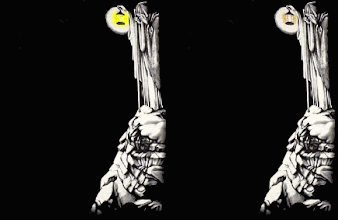
Led Zeppelin IV - Mickboy Remaster - 1971 / 2003


LED ZEPPELIN IV
MickBoy remaster

320 kbps.

1. Black Dog
2. Rock & Roll
3. The Battle Of Evermore
4. Stairway To Heaven
5. Misty Mountain Hop
6. Four Sticks
7. Going To California
8. When The Levee Breaks
9. Hey Hey What Can I Do - single version
10. Black Dog - acoustic version

Mickboy is famous for his reworking of the Rolling Stones catalog, though he's done a great job working over George Harrison's All Things Must Pass, and he's done at least one Led Zeppelin - this one.

Few people know who Mickboy is, and not very many know exactly what it is he does. Obviously he doesn't have access to the master tapes, so it's not really a 'remaster', it's certain that he does a 'needle drop'. He buys the best quality vinyl available - that's a plus right there - takes it into a studio and EQ's the hell out of it probably, and who knows what all else he does. It's not just EQ'ing that's for sure.

Unlike Dr. Ebbet's needle drops of the old Beatles LP's, Mickboy's goal isn't to faithfully reproduce what's on the viny, he enhances the sound in many subtle ways. Whether this is a good thing or not, whether his 'remaster' is better-sounding or just different-sounding, that's for you to judge. To my ears this job he did on Led Zep 4 is stupendous. Man it just sounds awesome. The whole thing sounds fuller, warmer, and more clear and vibrant than the original. Included are two bonus tracks - Hey Hey What Can I Do and an acoustic version of Black Dog - both worked over by the Mickboy!

http://rapidshare.com/files/31831700/mickboylz4320.part1.rar
http://rapidshare.com/files/31826379/mickboylz4320.part2.rar

The Doors: Flushing Meadows Park 1968 (VG Aud)


August 2nd (Friday), 1968
Flushing Meadows Park, Singer Bowl, Queens, New York
- The New York Rock Festival at The Singer Bowl -

- Introductory Instrumental (without Jim)
1. Back Door Man 3:32
2. Five To One 4:40
3. Break On Through 3:40
4. When The Music's Over > 12:33
"Vast Radiant Beach" >
"Dawn's Highway" >
"The Royal Sperm"
5. Wild Child 2:46
6. Wake Up 1:36
7. Light My Fire 8:45
8. The End* 17:04

*Taken from an alternate source
Total running time 54:36

When the Doors went back east with their film crew in early August 1968, Jim Morrison was primed. Although half drunk, ge played a riveting, focused show with his eyes closed in Bridgeport, Connecticut, on August 1, barely moving at all as a looming summer thunderstorm echoed over the Long Island Sound. the concert had a surreal vibe as Jim bore down, enunciating lyrics and poems with hyperbolic clarity. The audience sat transfixed, and left quietly after the encores "Little Red Rooster" and "The Unknown Soldier."
The next night, August 2, the film crew finally got its riot.
It was a steamy friday night in New York City. The Doors were headlining the Super Bowl, in Flushing Meadows, Queens. There was tension backstage. The opening act, the rip-roaring English band the Who, perhaps the most hottest group in the world that summer, were angry they weren't headlining, and demanded the Doors' gear not be onstage as they played their incendiary live show that ended in explosions and splintered guitars. During the Who's set, the Singer Bowl's revolving stage malfunctioned, leaving a large part of the audinece unable to see the performance and extremely annoyed.
Jim rode to the show in a limo with Jac Holyman and Ellen Sander, who later wrote: "Morrison and 'the boys' had grown apart. He was too crazy, too unreliable, too intellectual, too conceited, but mostly he was too insecure. They shummed him socially, and he retailated by terrorizing them with the threat that he'd quit. He was lonely, as all writers must be, and he often drank himself blind and created a scene. He was also a rather pleasant guy when he wasn't acting out."
On the ride to the gig Jim flipped through the Village Voice and mumbled about how bored he was in New York. The driver got lost. "Fucking anarchy," Jim said. He started singing "Eleanor Rigby." Sander told him he was weird, and Jim said, "I tries." In a traffic jam near the Singer Bowl, Jim opened the limo's window and let a mob of excited kids grope him.
"Will some of you chicks escort me backstage?" he asked. "I might get mobbed or something."
The backstage area was cramped and sterile. Checking the film crew was with him, Jim stepped out to the crowd and was surronded bykids who seemed afraid to get too close. He signed a few autographs and then disappeared backstage.
Pandenmonium ensued when the Doors finally appeared after an hour's delay, ushered through the fifteen-thousand-strong crowd by a newly hired phalanx of black Philadelphia private detectives in stingy-brim hats. Off-duty uniformed police repelled an initial assault on the stage, then formed into a defensive perimeter. Jim had to push his way through the line of though New York street cops in order to face the crowd.
"Cool down," he told them. "We are going to be here a long time."
He preached to them, screamed, moaned, collapsed, and pussy-footed along the rim of the stage. The kids infront tried to grab at him, and twenty cops onstage had to pry them away. Jim intercut familiar songs with long stretches of "Cleberation" and other snatches of surreal, ad-libbed poetry that mystified the restive Long Island teenagers. When the cops got rough with the kids upfront, wooden seats flow onto the stage, Jim picked them up and threw them back into the convulsive crowd. The film crew kept shooting and tried to duck the lying debris.
The last song of the night was "The End." The kids, who couldn't see were fustrated, upset, and very loud. Many tried to speak to Jim onstage. Others ket shouting "Sit down" at overwrought kids standing on chairs to see better.
"Shhhh," Jim whispered. "Hey, everyone! This is serious now. Everyone - get quiet, man. You're gonna ruin this thing. Shhhhh."
He kept interrupting the familiar flow of the recorded version with poetic interjections - "Fall down now, strange gods are coming" amd other improvistaions. At one point he shrieked, as if in a nightmare: "Don't come here! Don't come in!" When he began the Oedipal verses, the audience was way ahead of him, yelling "And he walked on down the hall" before Jim spoke the line himself. When Jim got to the climactic "Mother?" hundreds of young girls screamed in terror. As the band crashed into the finale, Jim collapsed onstage like he'd been shot, and the stadium exploded. Robby Krieger finished the set in the electric storm of reverb and feedback.
Jim wasn't finished yet. As the show was ending, he went to the edge of the stage and made a negative connection with a young Hispanic couple he"d been yeing down front. He looked at this big Puerto Rican guy and said, "Who's that Mexican slut you're with tonight?" The guy picked up his seat and heaved it at Jim. The whole stage area erupted in dozens of chairs came flying through the hot, humid air. Jim kept dancng and laughing hysterically. The cops tried to get him off the stage, but he layed down and they couldn't move him.
Finally the Afro-American bodyguards hustled the band toward the dressing room. the cops fought with the kids, and a miniriot ensued with a dozen arrests and several injuries, all reported in papers the next day.
The Doors road crew had to defend the amplifiers from being torn apart. After the crowd was cleared out, the Singer Bowl looked like it had been bombed.
Pete Townshend, the Who's flamboyouant, intellectuallead gutarist, watched this wild drama from the side of the stage. He saw Jim watching impassively as his bodyguards roughed up kids who just wanted to get near him. He thought he had seen it all by then, but he was amazed by Jim Morrison's calculated escalation of the crowd's mood adulation to rapture to chaos and violence. He wrote the song "Sally Simpson" soon afterward, in a backhand tribute to Jim.
Backstage, as the film crew"s camera rolled, Jim comforted a teenage girl who had been hit in the head by a flying chair. She was bleedingfrom a scalp wound and trying to stop crying as Jim put his arm around her.
"It's demoracy," Jim said shootingly, looking into the camera with a crooked smirk. "Somebody hit her with a chair. There"s no way to tell who"s did it." Tenderly, Jim wiped blood from her face. "It's already coagulating," he cooed. "She was just an innocent bystander."
When a groupie -looking chick shasayed by in a red dress, Jim grabbed her and stuck his hand up her dress for the benefit of the camera,smiling broadly. Later he said, "Did you think it looked phony, me talking to her liked that?"
On Saturday, August 3, 1968, "Hello, I Love You" was the top single in the country, blaring mindlessly from every car in America.
The Doors played the Cleveland Public Auditorium that night, with Jim again working the crowd forthe film crew. He arrived at the hall shit-faced, and let the band play "Break On Throgh" for five minutes without him. when Jim finally appeared, he was clutching a quart of Jack Daniel's in his right hand a nd giving the sold-out, nine-thousand seat a finger with his left. He began shouting and lurching around, singing incoherently as Krieger tried to drown him out with extraloud shards of feedback and echo. This got Jim mad. "I can't hear myself! I'm gonna give you a good time, but I want it real soft." He turned to the band. "If I can't hear myself, I'm gonna get a gun and kill some people here."
During a long, horrid version of "Five To One" he started talking with the kids upfront, drawing up in laughter, derivision, and applause. Then he yelled "Listen! Llisten! I want you to feel it. I'm not kidding! I want you to feel it!"
He missed all his vocal cues during "When The Music's Over," and Krieger kept trying to mask his petulant antics with washes of electronic noise. Jim came back to the microphone. "Softer, baby, softer. Gotta feel it inside. Take it deeep inside....Hey, listen. I want to give you a history of me. All right! All right! I have a few things to say, if you don't mind...I don't know where I am or how I got here, but I did." He began to recite his poems "Vast Radiant Beach" and "The Royal Sperm." He asked for a Marlboro and dozens of cigarettes landed at his feet. The band lit into "Soul Kitchen," but Jim was getting tired and wandered awaz from the microphone. He seemed to be vomiting at the side of the stage, which drew a loud burst of the applause. By the time the band lit into "Light My Fire," Jim's mind had left the building. He kept shouting, "Come on," during Ray's solo. As Robby began his, Jim was yelling as loud as he could:
"YOU KNOW I CAN'T TAKE IT! YOU KNOW THAT! I CAN'T TAKE IT ANYMORE! COME ON! YEAH! COME ON!"
Suddenly Jim dived into the crowd with his live microphone, and it looked like a footbal scrimmage. Fights started as he was passed over the heads of the audience, chanting the yippie yell: "DO IT! DO IT!" By the time he made it back to the stage, Jim's voice was gone and the band finished "Light My Fire" and ran off.
The kids kept chanting Jim's name but there was no necore. They started throwing chairs, wrecking the concession stands, and tearing heavy wooden doors to pieces in a wanton ritual of destruction.
The final show of that wild weekend was played at the Philadelphia arena at the Forty-sixth Market on Sunday night, August 4, and it was magnificent. Strolling onto the sweaty hockey arena's stage amid wild cheering and applause at ten-thirty, Jim appeared sober and in command; he even asked the audience to stop bothering the relatively young cops who were guarding the stage. As "Backdoor Man" bled into "Five To One," Jim bummed a beer and a cigarette from the audience. He stood back and watched as Robby played a brazen, distorted solo that soon turned into a flamenco guitar clinic on "Spanish Caravan."
"What do you want to hear? Jim asked before the last section of the show. Hundreds began shouting requests. "One at atime," Jim tried. "I can't hear you." So he recited "Texas Radio" with its preaching cadences and images of Negroes in the forest and other exotica. Then "Hello, I Love You" got a quick reading, followed by "Wake Up!" and "Light My Fire," during which Jim yelled and twitched and danced around the mike like a aman on fire. The crowd surged forward, and the cops formed a defensive perimeter, as the Doors finished the song and ran off.
The Doors took the rest of August 1968 off. Jim was obviously brain fried, and anyway Waiting For The Sun was selling on its own. Unexpectedly, this cobbled-together melange of pop tunes and art songs would be the number one album in America by early September.

http://link-protector.com/428617/

password: jimbo

Monday, July 6, 2009

Never To Be Forgotten - Bobby Fuller Four.


A three-CD box set that includes everything Fuller recorded for Mustang between 1964 and 1966: all the LP and 45 tracks, the previously import-only album recorded at PJ's on Sunset Strip, over a dozen cuts that were unreleased during Fuller's lifetime, and rarities. Although much of the music is excellent, it should be stressed that this is for the Bobby Fuller fanatic; most fans will be quite content with the all-killer no-filler distillation of his best mid-'60s cuts on Rhino's Best Of compilation. Fuller's albums were filled out with some unmemorable hot rod tunes and generic rockers that seemed to have been cranked out under pressure for product. The rare selections (some of which, despite being designated as unreleased, have shown up elsewhere) are largely alternates of songs that were already available, and although these are occasionally interesting, the variations are mostly on the slight side. A couple of cuts by the Randy Fuller Four (led by Bobby's brother and bassist) don't measure up to his sibling's output in the least, sounding jarring and clumsy by contrast. The Live at PJ's disc is disappointing: it consists mostly of covers of familiar rock standards, for one thing, and neither the sound quality nor performance match the excitement that Fuller routinely generated in the studio during this time. But make no mistake, this is a good thing for fans to have, and is superbly packaged, with a 64-page booklet of critical essays, speculation on his mysterious death, and an interview with Randy Fuller.


Track List: Never to Be Forgotten: The Mustang Years:


Disk 1
Let Her Dance
Julie
A New Shade Of Blue
Only When I Dream
You Kiss Me
LIttle Annie Lou
I Fought The Law
Another Sad & Lonely Night
Saturday Night
Take My Word
Fool Of Love
Never To Be Forgotten
My True Love (Unreleased Alt.)
You're In Love (Unreleased)
Our Favorite Martian
Those Memories Of You
Think It Over (Unreleased)
Pamela (Unreleased)
Wolfman
Thunder Reef
It's Love, Come What May
Gallenkamp Shoe Comercial
Unknown

Disk 2
King Of The Wheels
KRLA Top Eliminator
Keep A Knockin'
The Phantom Dragster
The Lonely Dragster
She's My Girl
Love's Made A Fool Of You
Don't Ever Let Me Know
Cheat & Lie (Unreleased)
Jenny Lee (Unreleased)
My True Love
Baby My Heart (Unreleased)
The Magic Touch
I'm A Lucky Guy (Unreleased)
The Things You Do (The Randy Fuller Four)
Now She's Gone (The Randy Fuller Four)
Angel Eyes (Unreleased - Backing Track)
A New Shade Of Blue (Unreleased)
Only When I Dream (Mono LP Version)
It's Love, Come What May (Unreleased)
I Fought The Law (Single Version)
Never Be Forgotten (KRLA LP Stereo)


Disk 3
I Fought The Law
Brown Eyed Handsome Man
A New Shade Of Blue
Let Her Dance
C.C. Rider
Anytime At All
My Babe/Keep A Knockin'/Long Tall Sally
Vamp Introduction
California Sun
Do You Wanna Dance
Wooly Bully
Gloria
Oh Boy
Carol
Thunder Reef
High Heel Sneakers
Slow Down
Think It Over
Money/Shakedown (Medley)


Command Performance Live In Person - Jan and Dean - 1964.


Fred Vail, Beach Boy s' early 60's promoter uncovers the story of how Jan & Dean recorded their great live album! What you may not know, however, is how the "Command Performance" album came about. Back in the early 60’s, and prior to "Surfin’ USA," "Little Deuce Coupe" and "Surfer Girl," The Beach Boys actually opened for Jan and Dean. That billing would be reversed during the late spring and summer of 1963, but the fact is that Jan and Dean (and Jan and Arnie) actually predated The Beach Boys by nearly three solid years.

I had first met Jan & Dean nearly three years before I produced my first of hundreds of Beach Boys concerts, May 24, 1963, at the Sacramento Memorial Auditorium. Just one year prior to that, on May 24, 1962, I had presented Jan and Dean, along with Johnny Crawford, Bobby Freeman, and Smokie Robinson and The Miracles, at a school assembly at El Camino High School in the afluent north area of Sacramento. I was the school Commissioner of Entertainment and, as such, was responsible for putting on the school dances, assemblies, and pep ralleys. I had just turned 18.

Two years prior to that–in 1960–I had met Jan & Dean when Dick Clark took his American Bandstand on the road to Treasure Island Naval Shipyard–across the Bay from San Francisco. I was working as a gopher at KXOA Radio, a ‘Top 40′ station, along with working weekends as an ‘announcer’ at KXRQ-FM, a jazz station. Only the Top 40 guys were called ‘deejays’ in those days, the other formats used the term "announcer."

After the May 24, 1963 Sacramento Beach Boys concert I was hired by ‘beach dad’ Murry Wilson as the band’s first ‘advance man,’ setting up concerts and dances throughout the west coast. In fact, I was the first ‘employee,’ per se, of The Beach Boys.

Like you, Bob, I got into radio and records because, first and foremost, I loved great music and I loved being around all those great singers, songwriters, and bands who were making the music– a passion that has continued for well over 50 years.

In fact, after bringing the ‘boys’ on stage, I would typically go out into the audience and take in as much of the show as I could. The Beach Boys–in their white pants and stripped shirts–were fabulous on stage and the girls would scream at every song and gesture–much like the audiences would do less than a year later when The Beatles exploded on the scene.

After producing and promoting a dozen or so Beach Boys concerts, including a ‘dance and show’ on November 22, 1963–the day of the Assassination of President John F. Kennedy–I approached Murry and Brian with an idea. To me, it was a ‘no-brainer,’ but to Murry–who was approximately twenty years my senior–and to Brian, it was met with a bit of skepticism. My idea was to record a Beach Boys concert and release it as a ‘live’ album.

Recording a ‘live’ album, in and off itself, was not an original idea. "The Kingston Trio From The Hungry-I" had been released in January 1959, and two years later, Capital had recorded and released "Judy At Carnegie Hall," the historic Judy Garland two record set that won five Grammy Awards, including Best Album," of 1961. Jazz musicians had recorded numerous ‘live’ albums. However, recording and releasing a ‘live’ rock and roll album had not been done.

I suggested that we record the album in Sacramento, the city that had really established The Beach Boys as a headlining attraction. I produced the first of two recorded concerts on December 21, 1963. It was the third appearance the group had made in Sacramento in barely seven months, not including the November 22 concert in Marysville, California, 50 miles north of Sacramento. Brian decided to record a ’second’ Sacramento concert that summer, combining the two for the August 1964 "Beach Boys In Concert" release. It was the group’s first Gold album and their first #1 album.

Barely a month later I received a phone call from Jan Berry. "Fred, I want to do what you did for Brian and ‘the boys.’ " "You mean you want to record a "live" album in Sacramento," I asked. "Yes," Jan said. "We love that city and the girls scream their asses off up there," Jan replied. Then he added, "work out all the details with Lou (Adler) and lets get started."

Jan & Dean recorded their ‘live’ album on October 24, 1964. I introduced popular Los Angeles deejay (and a Brian Wilson/Jan Berry co-writer) Roger Christian, who, in turn, introduced Jan & Dean:

"Fella’s hold on to your girls; girls–just ‘hold on.’ Here’s America’s #1 duet, Jan & Dean." Since the duo often lipsynched at shows, they had me assemble a band for this particular concert. Hal Blaine on drums, Steve Berry on bass, Phil (PF) Sloan on keyboards, and another popular LA session player, Glen Campbell, on lead guitar.

The Sacramento concert was combined with tracks from "The T.A.M.I Show," and "Command Performance" was born.

"And now," as Paul Harvey would say, "you know the rest of the story."

01 - Surf City
02 - Little Honda
03 - Deadmans Curve
04 - I Get Around
05 - All I Have To Do Is Dream
06 - From All Over The World
07 - Rock And Roll Music
08 - The Little Old Lady From Pasadena
09 - Do Wah Diddy
10 - I Should Have Known Better
11 - Sidewalk Surfin'
12 - Louie Louie

http://tinyurl.com/2yc5q8

Give Us A Wink UK Remaster - Sweet - 1976.


Building on the momentum caused from the runaway success of Desolation Boulevard, Sweet forged ahead and shoved Give Us a Wink out to satisfy their growing legions of rabid fans. Doing it all without the aid of Chinn & Chapman, they truly held their destiny in their own hands for the very first time. "Action" gave them another Top Ten hit, and along with such other notable cuts as "Cockroach" and "Yesterday's Rain," they proved they had the goods.

This new UK remaster of "Give Us a Wink" uses the less satisfactory UK running order,which lacks "Lady Starlight"(version 2) which was on the U.S.A. album.The remastering is decent.As for the bonus tracks,you get the 7" single version of "Action"(a different intro,but otherwise the same take as the album version,which featured a longer intro which was spliced on to the same take.What I mean is that the intro on the single version is the orginal,the album version's intro is a revised intro.).The other two bonus tracks are alternate "Munich mix" versions of "Cockroach" & "4th of July",which are essentially alternate takes."Cockroach" features totally different vocals,and "4th of July" a prominent piano,which diluted the song's hard rocking impact.These are similar(but not identical) to the versions heard on the German CD "Platinum Rare".But if you're looking to hear the U.S.A. version of the album,get the Japanese Toshiba/EMI/Capitol CD of the album.That CD reproduces the album cover art(and its' graffiti) in full.

Sweet - Give Us A Wink (1976) (Remastered Bonus Edition)
APE+CUE - 381 mb mp3-320 kbps - 130 mb 52:48

Tracklist:
01. The Lies In Your Eyes
02. Cockroach
03. Kep It In
04. 4th Of July
05. Action
06. Yesterday's Rain
07. White Mice
08. Healer
09. Action (7' version)
10. Cockroach (Munich Mix)
11. 4th Of July (Munich Mix)

mp3 - 320 kbps
http://rapidshare.com/files/157552958/SweeGiveUs320.part1.rar
http://rapidshare.com/files/157551817/SweeGiveUs320.part2.rar

APE+CUE
http://rapidshare.com/files/157553925/SweeGiveUsAPE.part1.rar
http://rapidshare.com/files/157555018/SweeGiveUsAPE.part2.rar
http://rapidshare.com/files/157556016/SweeGiveUsAPE.part3.rar
http://rapidshare.com/files/157556874/SweeGiveUsAPE.part4.rar

Sweet Fanny Adams UK Remaster - Sweet - 1974.


For a few reasons, Sweet could never emulate their chart success in the U.K. and Europe in the U.S. Part of the problem was that the singles and LPs that were released in the U.K. and Europe were not released in the same format in the States, or sometimes not at all. In the U.S., the Desolation Boulevard LP on Capitol was actually taken from two 1974 RCA releases, the first of which was Sweet Fanny Adams and the second of which was the original Desolation Boulevard. Much of Sweet Fanny Adams was recorded in late 1973 and then released in early 1974. Desolation (RCA) was recorded in 1974 and released toward the end of the year. In the U.S., the Capitol version of Desolation Boulevard was released in 1975 and included half of the tracks from the two RCA albums, plus the single "Ballroom Blitz" which was not on either RCA LP but is a bonus track on the Sweet F.A. CD. Some of the other RCA tracks were issued as B-sides of Capitol singles but many other tracks were not issued at all. In my view, releasing this material in 1975 in the U.S. hindered success of the band as the two 1974 LPs represented the band at its peak. By the time "Give Us A Wink" was released in 1976 (at last in the same format on both sides of the Atlantic) disco had taken hold in the U.S. and the group was marginalized as hard rock/glam. Not even the 1978 success of "Love Is Like Oxygen" could help as the line-up that held for eight years would finally fracture the following year. Finally, the 2005 re-releases of Sweet Fanny Adams and Desolation Boulevard on BMG-Sony make previous renditions obselete. The mastering is first rate and the selection of bonus tracks is superb.

Although there is not one hit single featured on this album I recommend it as the best thing Sweet ever recorded.Out to prove themselves as more than a "singles band" they surpassed themselves both with songs and overall production which was handled by Phil Wainman.The album opens with the swirling, metallic "Set Me Free" written by guitarist Andy Scott (covered in the 80`s by Saxon on "Crusader") and I remember as a thirteen year old climbing the walls with excitement. Hellraiser and Ballroom Blitz only hinted that the band were capable of these sounds."Heartbreak Today", the second track has a Zeppelinesque riff and Connolly`s vocals have real depth and feeling. Once again the production makes your hi-fi sound ten times better than it probably really is.Next track "No You Don`t" was sung by Steve Priest, bassist and was covered later by Pat Benatar on her first album. Very angry, aggresive song complete with cellos reminiscent of the Rolling Stones on "19th Nervous Breakdown"."Rebel Rouser" and "Peppermint Twist" are probably the poppiest tracks the album has to offer. One of them was a big hit for the band in Australia (can`t remember which however!)"Sweet F.A." is the epic of the album at over 6 minutes long. It ROCKS! Heavier than any of the supposedly heavy bands of the time! Scary for little Mary I`d say!"Restless", again sung by Steve - a great stage favourite - a bitlike Free`s "Alright Now"."Into The Night", the next track was written and sung by Andy Scott and is reminiscent of something from Deep Purple`s "In Rock" album.The album offficially closes with "AC/DC" (rumoured to be where a certain Australian band took their name.) A song about bi-sexuality!!! This CD version of the album has some bonus track which were initially hard to get hold of B sides that indicated this monster of an album might be in the hearts of this greatly underrated band.If you love Seventies rock music, if you love great playing, if you love a well produced album, if you ever wondered what Sweet were really all about - THIS IS THE ALBUM!

Sweet - Fanny Adams - 1974 (Remastered Bonus Edition)
APE+CUE - 456 mb mp3-320 kbps - 175 mb 1:14:24

Brian Connolly - Vocals
Steve Priest - Bass, Harmonica, Vocals
John Rollo - Engineer
Andy Scott - Synthesizer, Guitar, Vocals
Mick Tucker - Drums, Vocals

Trackslist:
1. Set Me Free
2. Heartbreak Today
3. No You Don’t
4. Rebel Rouser
5. Peppermint Twist
6. Sweet F.A.
7. Restless
8. In To The Night
9. AC-DC
10. Blockbuster (Bonus Track)
11. Need A Lot Of Lovin’ (Bonus Track)
12. Hell Raiser (Bonus Track)
13. Burning (Bonus Track)
14. The Ballroom Blitz (Bonus Track)
15. Rock ‘n’ Roll Disgrace (Bonus Track)

mp3 - 320 kbps
http://rapidshare.com/files/156639689/Sweet_F_A_320.part1.rar
http://rapidshare.com/files/156640065/Sweet_F_A_320.part2.rar

APE+CUE
http://rapidshare.com/files/156640883/Sweet_F_A_APE.part1.rar
http://rapidshare.com/files/156642308/Sweet_F_A_APE.part2.rar
http://rapidshare.com/files/156637418/Sweet_F_A_APE.part3.rar
http://rapidshare.com/files/156638354/Sweet_F_A_APE.part4.rar
http://rapidshare.com/files/156638774/Sweet_F_A_APE.part5.rar

Desolation Boulevard UK Remaster - Sweet - 1975


Sweet hit the peak of their powers on Desolation Boulevard, a wonderfully lightweight collection of fizzy melodies and big, dumb hooks. Essentially, the album consists of three dynamic singles buoyed by a bunch of filler, but those singles — "Ballroom Blitz," "The 6-Teens," and "Fox on the Run" — are addictive slices of bubblegum glam rock. And the filler is ridiculously silly and enjoyable, with "Sweet F.A.," "I Wanna Be Committed," and "No You Don't" sounding like a kind of bizarre prototype for the Ramones' punky bubblegum (only without the irony, of course). Although the filler is relatively strong, there are a number of weak patches on Desolation Boulevard, but it remains an intoxicatingly fun record and one that sounds surprisingly fresh, even with all of its kitschy '70s production techniques.

This is not your mom's version of the North American "Desolation Boulevard" if you want all those songs you need (and want) to get the "Sweet Fanny Adams" album also. This being said and done, SWEET continue their adolescence here. The songs are about growing up teens (the Sixteens), Rebellion and of course girls. By now we know to expect the great guitar riffs and vocal harmonies SWEET is so good at delivering. Also a rarety for SWEET, a slow song! The original version of "Lady Starlight", it slightly differs from the one that was included on the North American release of the album give us a wink. Slightly less polished but, the song remains the same (Ha ha ha). Also, nice of them to include the original and single version of "Fox on the Run" which are very different. Again a lot of very nice extras like "Burn on the Flame" which in my opinion is one of the best "B" side songs to never have made it to an album (until now that is).

Sweet - Desolation Boulevard 1974 (Remastered Bonus Edition)
APE+CUE - 555 mb mp3-320 kbps - 180 mb 1:15:50

Tracklist:
1. The Six Teens
2. Solid Gold Brass
3. Turn It Down
4. Medussa
5. Lady Starlight
6. Man With The Golden Arm
7. Fox On The Run
8. Breakdown
9. My Generation
10. Teenage Rampage (bonus track)
11. Own Up, Take A Look At Yourself (bonus track: B-side of "Teenage Rampage")
12. Burn On The Flame (bonus track: B-side of "The six teens" )
13. Someone Else Will (bonus track: B-side of "Turn it down")
14. Medussa (bonus track: Home demo - prev. unreleased)
15. Burn On The Flame (bonus track: Home demo - prev. unreleased)
16. I Wanna Be Comitted (bonus track)
17. Fox On The Run (bonus track: 7" version )
18. Miss Demeanor (bonus track: B-side of "Fox on the run")

mp3 - 320 kbps
http://rapidshare.com/files/158849563/SweeDesBoul320.part1.rar
http://rapidshare.com/files/158850281/SweeDesBoul320.part2.rar

APE+CUE
http://rapidshare.com/files/158852008/SweeDesBoulAPE.part1.rar
http://rapidshare.com/files/158853044/SweeDesBoulAPE.part2.rar
http://rapidshare.com/files/158854011/SweeDesBoulAPE.part3.rar
http://rapidshare.com/files/158854916/SweeDesBoulAPE.part4.rar
http://rapidshare.com/files/158855926/SweeDesBoulAPE.part5.rar
http://rapidshare.com/files/158856464/SweeDesBoulAPE.part6.rar

Sunday, June 21, 2009

Captain Beyond - 1972.


Captain Beyond is a one-of-a-kind progressive album with rock, heavy metal, and jazz influences with a "space rock" lyrical bend. Formed by former members of Deep Purple (Rod Evans, vocals), Iron Butterfly (Rhino, lead guitar, and Lee Dorman, bass), and Johnny Winter (Bobby Caldwell, drums) Captain Beyond is an album that flows from riff to riff, drumbeat to drumbeat, often with various time signatures within the same song. Taking a tip from the Moody Blues, songs flow directly into each other without benefit of any lag time between selections. Taken as a whole, the album is kind of a rush, as quick, riff-laden guitar lines predominate for a few songs before slowing down temporarily into a lull until the next takeoff. Lyrically, the album differentiates itself by exploring themes of the outer world and meanings of existence, often with references to the moon, sea, sun, and so on. Listeners may get the feeling of taking a journey to space in a rocket ship headed for destination unknown. Musically, the album is superior in all aspects. Rod Evans has a strong rock voice, Rhino plays an enormous amount of hook-laden guitar lines, and Lee Dorman plays complex basslines (for example, at the end of "As the Moon Speaks-Return") that lead to typically rhythmic, nimble Bobby Caldwell drumming. The tightness between musicians is enormous, never lets up for long, and leaves the listener feeling like the ride should continue for the indefinite future. A stunner!

"Dancing Madly Backwards (On a Sea of Air)" – 4:01
"Armworth" – 1:48
"Myopic Void" – 3:30
"Mesmerization Eclipse" – 3:48
"Raging River of Fear" – 3:47
"Thousand Days of Yesterdays (Intro)" – 1:19
"Frozen Over" – 3:46
"Thousand Days of Yesterdays (Time Since Come and Gone)" – 3:56
"I Can't Feel Nothin' (Part 1)" – 3:06
"As the Moon Speaks (To the Waves of the Sea)" – 2:25
"Astral Lady" – 0:16
"As the Moon Speaks (Return) – 2:13
"I Can't Feel Nothin' (Part 2)" – 1:13

http://rapidshare.com/files/34707059/1972_-_Captain_Beyond.zip.html

Captain Beyond - Sufficiently Breathless - 1973.


Captain Beyond's second album must have confused the diehards. Where their self-titled debut had upheld the basic progressive heavy rock blueprint of lengthy instrumental explorations, constant tempo changes, and opaque, yet cinematic lyrics, Sufficiently Breathless downplays them for a subtler, song-oriented production. The predominant mood is snappy and businesslike; no track runs over five and a half minutes. This newfound conciseness certainly benefited such heavy-rocking efforts as "Distant Sun," even as the band stuck to their diverse guns on the moody, acoustic title track and the sleek Latin funk rock of "Bright Blue Eyes" and "Everything's a Circle." The results were intelligent and self-assured, yet the band's never-ending bad luck again intervened when vocalist Rod Evans quit in late 1973, leaving the album adrift. The band would proffer a markedly different style on their return four years later, but anyone dismissing progressive heavy rock as an oxymoron should definitely check out this album first.

"Sufficiently Breathless" – 5:15
"Bright Blue Tango" – 4:11
"Drifting in Space" – 3:12
"Evil Men" – 4:51
"Starglow Energy" – 5:04
"Distant Sun" – 4:42
"Voyages of Past Travellers" – 1:46
"Everything's a Circle" – 4:14

http://rapidshare.com/files/123816446/Captain_Beyond_-_Sufficiently_Breathless__1973.rar

Sunday, June 14, 2009

"Argus" - Wishbone Ash - 1972


In the summer of ’72 I’m standing in a downtown record store holding this album in my hands. Hmmm…great Storm Thorgerson album cover. Hmmm…twin lead guitars. Could be interesting. But who are Andy Powell and Ted Turner? I didn't buy the album that day, but about a week later, I did. I took it straight to a friend's house, and we had a listen. Needless to say, it just about took our faces off.

British band Wishbone Ash plays a mix of blues/boogie, folk, and progressive rock- style riffs mated to endearingly cosmic lyrics. As always, the band's basis is the tag team guitars of Andy Powell and Ted Turner. Fans of this duo's mix of harmony guitar licks and duelling solos will find much to admire here. The band hailed from Britain and their unique style is spotlighted at its best on this there third album released in 1972. Also featured are Martin Turner on bass and vocals and Steve Upton on drums. The band’s unique style is spotlighted at its best on this album.

On “Argus” the band’s move towards more progressive material with "Warrior" and "Throw Down The Sword" was a great strategy and both tracks provide some of the best twin harmony guitar jams of the 70's. Tracks like "Time Was" and "Leaf And Stream" retain a folk consciousness and "The King Will Come” remains a cool mini-epic song. If you have never explored Wishbone Ash this is the album to start with. Some of their other discs are very good, but this is the band at their high water mark. The music and melodies are haunting while the axe work both harmonic and solo is outstanding.
"Argus" was and still is Wishbone Ash's ultimate statement. Part progressive rock, part blues / boogie rock and a bit of folk rock thrown in, this album really put all of the band's strengths together to form what is in my mind one of the classic guitar albums of the early 70's. Yes, there are indeed many of us who have owned this album for 30-some years, and who are still infatuated by its brilliance. Great music stands the test of time. It rises above mere nostalgia. “Argus” packs a wallop. What a combination of energy and sophistication! The music is well thought out--it's classy, but tailored to knock your socks off. If you have any idea of what it takes to make a band jell, I can almost guarantee that after the first four songs, you and your friends will be looking at each other with blank stares. "Juggernaut" does not even begin to describe this album. If you don't shout for joy at the sound of "Argus”, you don't deserve to call yourself a Rock fan.
CD 1
01. Time Was 9.46
02. Sometime World 6.57
03. Blowin' Free 5.20
04. The King Will Come 7.08
05. Leaf And Stream 3.55
06. Warrior 5.53
07. Throw Down The Sword 5.59
08. No Easy Road 3.39
09. The Pilgrim 10.10
10. Phoenix 17.06

CD 2
01. Time Was 10.14
02. Blowin' Free 5.51
03. Warrior 5.44
04. Throw Down The Sword 6.47
05. The King Will Come 8.11
06. Phoenix 19.35
07. Blowin' Free 5.38
08. Throw Down The Sword 6.13

http://lix.in/-346060

Sunday, June 7, 2009

Fosterchild - 1977.


After seeing this band play live at the Riv Rock Room in Edmonton in 1978 I sought out their self titled first LP release and to my surprise was quite good. Now after years of languishing in a basement trunk here is a fresh vinyl rip of an album back from the mists of time.
A native of Calgary, Vern Wills grew up playing in a number of bands honing his chops on the circuit. By 1974 he'd grown tired of the lack of support for Albertan musicians and headed to New York to join The Walkers. When his work visa ran out two years later, he returned to Canada, hooking up with Jim Foster upon his return to Calgary. A chance encounter a few years earlier sparked a friendship which led to the two beginning the process of writing material for their new band.
The early doors of the orphanage revolved frequently, but within a few months the group was rounded out by Peter Sweetzir on keyboards, Barry Boothman on bass and drummer Gerry Wand. They became staples of the 'b' circuit in Western Canada developing their style of mixing country with a laid-back rock feel. They signed to Bob Gallo & CBS in '76 - cutting the '45 "Let Me Down Easy" later that year. Their first full album came in the form of a self-titled country/rock effort in the summer of '77. The lead single "Until We Meet Again" hit the airwaves and the band hit the road doing mostly Western Canadian dates. On the backs of other tracks as well, such as the other singles "Magic Is In The Air" and "I Need Somebody Tonight", the album showed Wills & Foster's penchant for writing solid rock tunes with a country base.

Their sophomore effort came the next year in the form of TROUBLED CHILD. Like its predecessor, Gallo oversaw production with Jim Gaines, recording at Vancouver's Little Mountain Studios. It followed the same path of mellow, unoffensive country/pop. The album showed definite growth in the music and high hopes were put on the record. "Cuts Like A Razor" came out as the first single, backed by the title track. With the single showing a respectable Top 50 placing, "It's Too Late Now" became the second single. But waning interest from the label saw the band's cross-Canada tour cut short, followed by Sweetzir leaving the fold. They were released from CBS before year's end.

It would be only a year later that they would get picked up by Vera Cruz Records out of Edmonton. Recorded in Damon Sound Studios, ON THE PROWL came out the summer of 1980, the result of off-time writing in between deals. Foster had persuaded friend Doug Johnson to come in as new keyboardist and the record was the first time the band had a real say in how things were done. It showed a distinct change in direction - with more emphasis on a pop sound, something Gallo and CBS had tried to discourage. Instead of simply sounding like a cheap Stampeders knock-off, the album showcased Wills' & Foster's ability to combine clever pop hooks with a country influences that were a little more subtle than before, such as the lead-off "Hideaway", "Is That Girl Still In Town", the title-track and "Don't Play The Black Queen".

The band hit the road, touring with label-mates One Horse Blue but problems with the new label again cut short the tour. Once they were back Johnson went home to Vancouver and joined Loverboy. Unsure as to whether or not to continue, they ended up touring sporadically the next couple of years with the occasional replacement in the line-up, eventually calling it quits in '82. Foster would go on to join One Horse Blue shortly after, then released his debut solo album in 1986.

Here

Sunday, May 31, 2009

Truth (Mono edition!) - Jeff Beck - 1968


Personnel: Jeff Beck (guitar, bass); Rod Stewart (vocals); Nicky Hopkins (piano); John Paul Jones (Hammond organ); Ron Wood (bass); Mick Waller (drums).

The Jeff Beck Group's debut, 1968's TRUTH remains a stunner, probably the best work of the guitarist's long career. Perhaps energized by the bust-up of the Yardbirds, Beck is positively overflowing with ideas throughout the entire album, which pointedly starts with a completely different recasting of the Yardbirds hit "Shapes of Things." TRUTH then continues through an impressively varied set of tunes, ranging from an achingly slow, bluesy version of the Broadway standard "Ol' Man River" to a technically astounding acoustic solo version of "Greensleeves" and a killer pair of Willie Dixon covers including a take on "You Shook Me" that shreds Led Zeppelin's contemporaneous version. Throughout, the then-unknown Rod Stewart sings his heart out; he's as important to the album as Beck himself, and it's unsurprising that when Stewart and bassist Ron Wood left to form the Faces, the Jeff Beck Group never recovered.

Guests include both guitarist Jimmy Page and bassist/keyboardist John Paul Jones on "Beck's Bolero", originally recorded in 1966 with Keith Moon on drums and Nicky Hopkins on piano, and released as the B side to Beck's first solo release, "Hi Ho Silver Lining" in 1967.

Tom Scholz of Boston has listed Truth as his favorite album on Gibson's online magazine, stating, "I knew Jeff Beck's Truth album inside and out."

01. "Shapes of Things"
02. "Let Me Love You"
03. "Morning Dew"
04. "You Shook Me"
05. "Ol' Man River"
06. "Greensleeves"
07. "Rock My Plimsoul"
08. "Beck's Bolero"
09. "Blues De Luxe"
10. "I Ain't Superstitious"
11. "Tallyman" 1967 Single A-side DB 8227
12. "Love is Blue" Single A-side DB 8359 (edited begining)
13. "Ive Been Drinking" B-Side of "Love is Blue" single
14. "Rock My Plimsoul" - Faster tempo take, B-Side of "Tallyman" single

http://www.megaupload.com/?d=Q3HFIKQH

Tuesday, May 19, 2009

Live! In The Air Age - Be Bop Deluxe - 1977.


Originally released on white vinyl as a double set in which one disc was an LP while the other was a 12" EP, Live! In the Air Age is an impressive testament to one of prog rock's more interesting results. Bandleader Bill Nelson is better known for his solo work of the '80s and on, but prior to that he was a burgeoning guitar hero with a blazing style and a talented bunch of players backing him up. Live! In the Air Age touches on a variety of concert highlights, including the sarcastic "Fair Exchange," the leisurely "Adventures in a Yorkshire Landscape," and the monolithic instrumental version of "Shine," which was originally a much shorter and far less monolithic B-side. The version of "Shine" included here, however (and originally one side of the vinyl 12"), allows Nelson to enjoy a guitar workout that leans toward something other than rock. Overall, an extremely enjoyable live album that never feels like a rehash of the studio material.

1 Life in the Air Age 4:30
2 Ships in the Night 3:37
3 Piece of Mine 5:05
4 Fair Exchange 4:55
5 Mill Street Junction 4:43
6 Adventures in a Yorkshire Landscape 8:00
7 Blazing Apostles 6:32
8 Shine (*) 9:22
9 Sister Seagull (*) 3:42
10 Maid in Heaven (*) 2:28

http://www.megaupload.com/?d=0D6MFBKE

Sunday, May 10, 2009

Cumular Limit - The Yardbirds.


01 tinker, tailor, soldier, sailor [alternate version].mp3
02 shapes of things.mp3
03 happenings ten years time ago.mp3
04 over, under, sideways, down.mp3
05 i'm a man.mp3
06 white summer [alternate version].mp3
07 ten little indians.mp3
08 glimpses [alternate version].mp3
09 you stole my love.mp3
10 avron knows.mp3
11 spanish blood.mp3
12 my baby.mp3
13 taking a hold on me.mp3
14 dazed and confused.mp3
15 - (bonus) Tangerine.mp3

Cumular Limit is an album of previously unreleased live and studio recordings by English blues rock band The Yardbirds released in 2000. It features alternate versions of recordings from Little Games (#1, 6-9), live-recordings from Offenbach, 16 March 1967 (#2-5) and France TV ("Bouton Rouge", 9 March 1968[1], #14) and previously unreleased material from New York (#10-13).

For those Yardbirds fans who might be wondering if this release is scraping the bottom of the barrel somewhat, take note: "Cumular Limit" is nearly as essential as any of their other releases. Its purpose is to round out the previous "Little Games And More" set with recently-found material from their final 1968 studio sessions and a superb March '67 live TV appearance that appears in audio on the first disc and video on the second. The TV appearance, in which the Page-led lineup runs through blistering renditions of "Shapes", "Over Under", "Happenings" and an elongated, psychedelic "I'm A Man" (note the dancing audiences' confused reaction during the bowed guitar section!) prove that the group were still playing in peak form at this time, forging the heavy sound which would make Led Zeppelin legendary. The April '68 sessions are equally revelatory, as the group works on four tracks for their projected next studio album; freed from the restraints of producer Mickey Most that had made the previous "Little Games" a disappointment, the band turns out the lost power-pop classic "Avron Knows", the acoustic-flamenco gem "Spanish Blood", a decent singalong version of "My Baby" and the riff based rocker "Taking A Hold On Me". Page is on fire throughout, esp during "Spanish Blood" and at the end of "Avron Knows"; his fuzz and wah-wah playing also transforms the other two from standard to inspired. McCarty makes some experimental vocal contributions to "Spanish Blood" and a less-than-thrilling performance on "Taking A Hold On Me", although the latter would no doubt have been re-recorded by Relf. These cuts, which sound superb and surprisingly complete, were to be Page's last studio work before forming Led Zeppelin. As a bonus, the set also includes a live '68 TV rendition of "Dazed And Confused", another track which would probably have been recorded for the projected album, which yields a different lyric from the familiar Zeppelin take but is otherwise the exact same thrilling arrangement. "Cumular Limit" is rounded out by a few alternate versions from the '67 "Little Games" sessions; a few of these like "You Stole My Love" and "White Summer" are repeated from the earlier CD release but still sound good within the context of this one. In all, the set is worth it just to hear Page's playing alone; the songs themselves (esp "Avron Knows" and "Dazed And Confused", as well as the four on the TV appearance) are also great and with this release it now looks like all of the group's available material has been made officially available.

http://rapidshare.com/files/14600286...imit.part1.rar
http://rapidshare.com/files/14600325...imit.part2.rar

Saturday, May 9, 2009


GENESIS
Live in Zürich 1977 ("Zürich Revisited" version 2)
Hallenstadion, Zürich, Switzerland, 2 July 1977

This fantastic version of this show was released some years ago by Digital Brothers who made a great job merging two sources (soundboard and audience) to create an incredible sound matrix, restoring the live atmosphere that the raw soundboard was missing.

The "Zürich Revisited" bootleg soon became noted as the best bootleg from the 1977 tour.
But one could have different opinion. One reviewer wrote "I have mixed feelings about this. This audience/soundboard matrix sounds indeed closer to Seconds out than the soundboard (that's a compliment), but new problems have been introduced. The audience over the beginning and in the middle of several tracks is quite annoying..."
Yes, audience noise had been added which in itself shouldn't be an issue if it were not too intrusive during Phil's introduction and during several songs. Because of this issue "Zürich revisited" couldn't be compared to an official release ! Even if the sound quality of the music itself is astonishing.

The issue of audience noise is fixed in this new release (hence the version 2), making it much more enjoyable to listen to, and now really really close to an official release.

A new cover has also been designed (sorry but I find that "Zürich revisited" have the ugliest cover of all the 1977 Genesis boots)

As a bonus you'll find other tracks that Genesis played earlier in the 1977 tour but left off the set-list by the time of the Zürich concert.

Some notes about the bonus tracks :
"All in a mouse's night" is from the Gaumont theatre in Southampton. This soundboard recording suffered from the lack of bass guitar, totally inaudible (unrecorded ?). This flaw has been repaired in the version presented here (but I won't tell you how it was made possible ah ah).
"The knife" from Earl's court had its intro slightly cut in the original recording; this has also been repaired


Mike Rutherford : bass
Steve Hackett : guitar
Tony Banks : keyboards
Phil Collins : vocals, drums, percussion
with
Chester Thompson : drums, persussion

CD1
1. Squonk
2. One for the vine
3. Robbery, assault and battery
4. Inside and out
5. Firth of fifth
6. The carpet crawlers
7. In that quiet earth
8. Afterglow
9. I know what I like
10. Eleventh earl of Mar

CD2
1. Supper's ready
2. Dance on a volcano
3. Los endos
4. The lamb lies down on Broadway
5. The musical box
bonus tracks :
6. Myrtle the mermaid (intro)
7. Your own special way
(Dallas, USA, 19 March 1977)
8. All in a mouses's night
(Southampton, UK, 20 January 1977)
9. The knife
(London, UK, 24 June 1977)
10. Lillywhite lilith / The waiting room / Wot gorilla
(London, UK, 1 January 1977)

http://rapidshare.com/files/11352533...part1.zip.html
http://rapidshare.com/files/11361548...part2.zip.html
http://rapidshare.com/files/11354524...part3.zip.html